The New Gold Standard for AI Inference
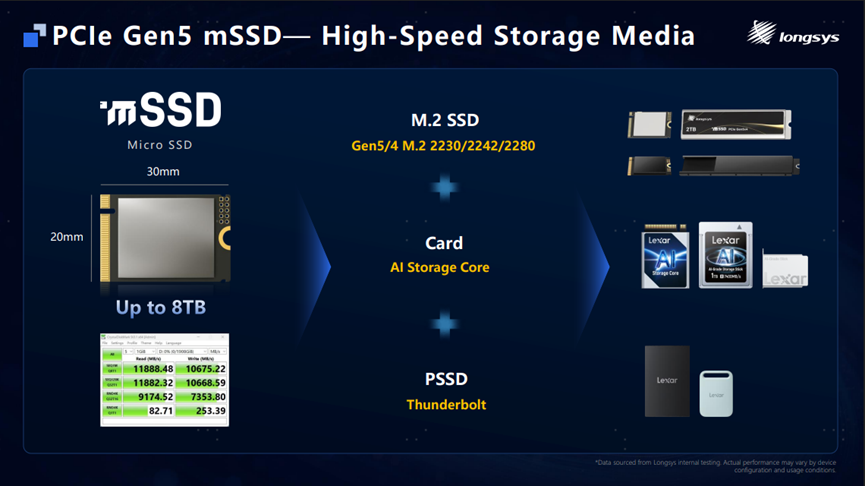
Imagine supercharging a small fleet of eight of the world's most powerful consumer graphics cards to perform the work of nearly five dozen. That's the promise of a groundbreaking SSD technology that leverages on-drive AI processing to dramatically accelerate AI inference tasks. This isn't a distant future concept; it's a tangible innovation that could reshape how data centers are built and operated.
The core of this breakthrough lies in moving part of the inference workload directly onto the SSD controller. By offloading specific, repetitive computational tasks from the GPU to a specialized AI accelerator integrated into the storage drive, the system effectively removes a critical bottleneck. This allows the GPUs to focus purely on their primary function—complex matrix calculations—while the SSD handles data routing and initial preprocessing at an unprecedented speed.
How It Works: Offloading the Bottleneck
Traditional AI inference often suffers from data starvation. The GPU sits idle, waiting for data to be fetched from memory or storage. The new SSD technology, however, incorporates a dedicated neural processing unit (NPU) that can execute lightweight inference models directly on the data path. This means raw data is not only stored but also intelligently filtered and organized before the GPU ever sees it.
The result is a staggering increase in effective computational power. Early benchmarks, which have been circulating in high-performance computing circles, indicate that a cluster of 8 NVIDIA GeForce RTX 5090s, when paired with this smart SSD, can achieve a throughput equivalent to what would typically require 46 standard GPUs. This represents a 5.75x performance boost in inference tasks, translating to massive cost savings on hardware, power consumption, and cooling.
The Impact on Data Center Economics
For enterprises and researchers building and renting AI clusters, this is a game-changer. The cost of GPUs, especially high-end models like the RTX 5090, is a primary factor in the economics of AI. A solution that multiplies the utility of each GPU not only lowers the initial capital expenditure but also drastically reduces operational expenses. Smaller data centers could achieve supercomputer-level inference performance, democratizing access to advanced AI capabilities.
Furthermore, this efficiency gain directly addresses the growing energy crisis associated with AI computing. By doing more with less silicon, the technology aligns with global sustainability goals without sacrificing performance. It's a pragmatic step toward making powerful AI infrastructure more accessible and environmentally responsible.
What This Means for the Future of AI Hardware
This development signals a clear direction for the industry: the lines between storage, memory, and processing are blurring. Future systems will rely less on monolithic, high-bandwidth memory pools and more on intelligent, distributed storage architectures that actively participate in computation. For the average tech enthusiast and developer, this means even more powerful AI tools will become available at lower price points in the coming years.
As security continues to be a concern in the tech landscape, ensuring your data is protected while using these powerful new systems is paramount. A premium VPN service can provide an essential layer of security for researchers and developers accessing these cloud-based AI clusters remotely, safeguarding sensitive intellectual property and training data.
The Bottom Line
The integration of AI processing directly into SSDs represents a significant leap forward. It challenges the traditional notion that only raw GPU count matters, proving that smarter architecture can deliver exponential gains. For anyone invested in the world of artificial intelligence, this is a development that promises to accelerate progress while simultaneously cutting costs.
Memuat komentar...